Step-by-Step Guide to Climbing Cotopaxi in Ecuador
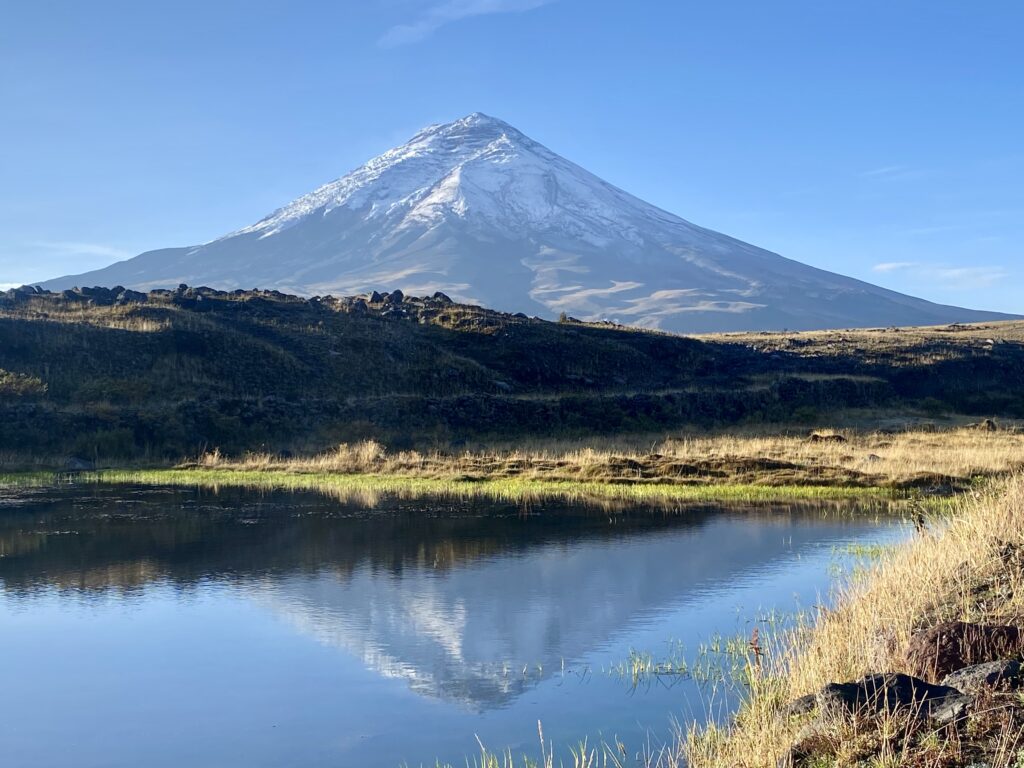
Cotopaxi, located in Ecuador’s central Andes, is one of the highest active volcanoes in the world, standing at 19,347 feet (5,897 meters). Known for its nearly perfect conical shape, Cotopaxi has had a history of violent eruptions, with major ones recorded in 1744, 1768, 1877, and 1904. The 1877 eruption caused lahars (volcanic mudflows) to travel over 60 miles (100 km) towards both the Pacific Ocean and the Amazon River basin. The region around the volcano has been repeatedly affected by earthquakes and covered in pumice and ash. Cotopaxi is also part of a horseshoe-shaped chain of between 850-1,000 volcanoes around the Pacific plate. This chain is known as the Ring of Fire
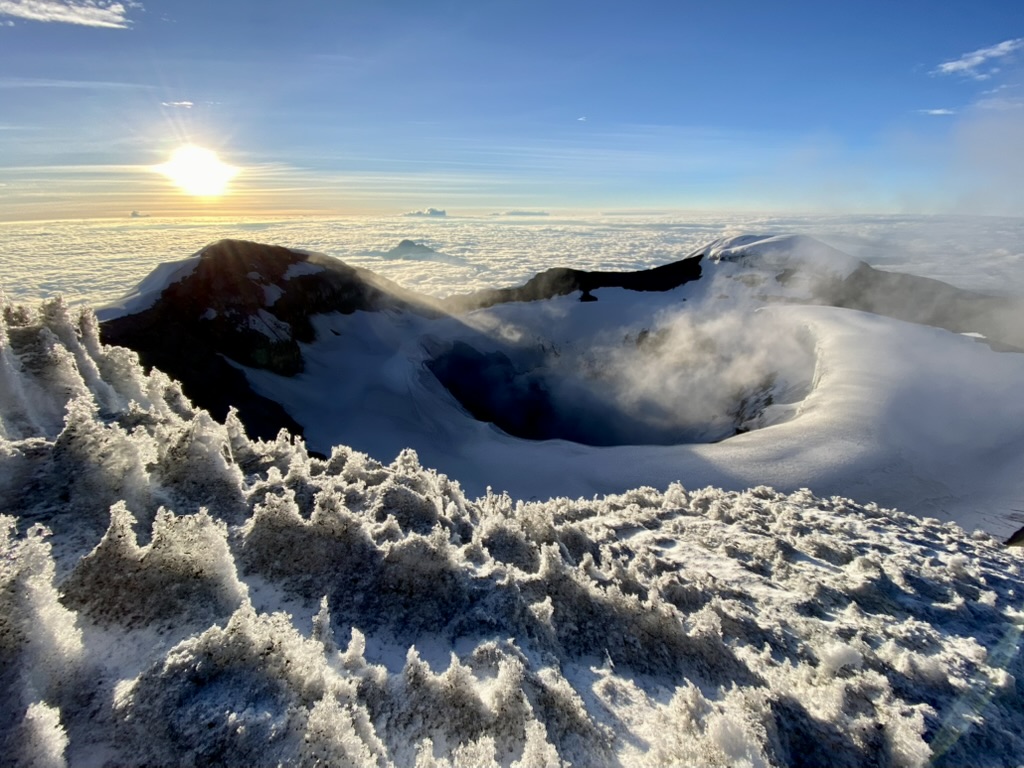
Cotopaxi’s summit crater measures 2,300 feet (700 meters) in diameter from north to south, 1,650 feet (500 meters) from east to west, and is 1,200 feet (366 meters) deep. While the lower slopes consist of open mountain grasslands, the upper part is permanently covered in snow.
The first European to attempt to climb Cotopaxi was Alexander von Humboldt in 1802, but he did not reach the summit. After several failed attempts by others, German scientist Wilhelm Reiss successfully reached the top on November 28, 1872, followed by A. Stübel the following year.
Today, Cotopaxi and its surrounding grasslands are part of the Cotopaxi National Park, established in 1975, which spans the provinces of Cotopaxi, Napo, and Pichincha. The park also includes two other significant peaks: the dormant Rumiñahui and the Sincholagua volcano, which last erupted in 1877. Located about 31 miles (50 kilometers) south of Quito, the park is a popular destination for tourists.
Important Tips for Climbing Cotopaxi
· ✔ Acclimatization is key — spend several days at altitude before the climb.
· ✔ Climbing must be done with a certified mountain guide (UIAGM/ASEGUIM).
· ✔ Technical gear is required: crampons, harness, ice axe, helmet, headlamp, warm layers, and glacier equipment.
· ✔ Weather conditions can change quickly — good fitness and flexibility are essential.
Best Time to Climb Cotopaxi
Cotopaxi can be climbed year-round, but the ideal period is between September and February, when summit winds are typically lighter. During the dry season, especially in July and August, snowfall is minimal, making the ascent more technical due to icy conditions. Strong winds are also common during this time, making it less favorable for climbing.
In March and April, wetter weather leads to a thicker snow cap on Cotopaxi, increasing the risk of avalanches. May and June are transitional months between the wet and dry seasons. If the rains taper off as expected, these months can offer favorable conditions for climbing.
However, the weather in high-altitude areas like Cotopaxi can be unpredictable, so it’s important to stay updated on current conditions and be prepared for sudden changes.
How to be ready to climb Cotopaxi
Climbing Cotopaxi is a challenging yet achievable endeavor for intermediate to experienced mountaineers. Beginners are advised to follow first a glacier climbing school due to the mountain’s snowy slopes and glacier traverses. Prior experience in high-altitude climbing up to 16,400 feet (5,000 meters) is advised and excellent physical fitness are essential. Climbing Cotopaxi requires the ability to walk for up to six – eight hours a day over several days. To prepare, you should incorporate progressively longer hikes into your training routine. If you can’t get to the hills, stair climbing is an excellent alternative to build endurance!
We recommend the book: “Training for the New Alpinism: A Manual for the Climber as Athlete”
Proper acclimatization is crucial, and we advise climbers to spend a few days in the area to adjust to the altitude before attempting the summit.
The summit of Cotopaxi, standing 19,347 feet (5,897 meters), is classified as ‘extreme altitude,’ while anything above 11,475 feet (3,500 meters) is considered ‘very high altitude.’ At these elevations, the air contains significantly fewer oxygen molecules (a condition known as hypoxia), which can lead to breathlessness and reduced performance. The best way to avoid altitude sickness is to acclimatize slowly to high elevations. If you’re beginning your adventure in Quito, Ecuador’s capital at 9.350 feet (2,850m), take an extra day to adapt to the altitude. We prepared a mountain itinerary that incorporates several day hikes and summits at an increasingly high altitude. Climbing too high, too quickly, isn’t the right way to tackle Cotopaxi. During preparation, it’s possible climb several peaks ranging from 13,780 to 16,820 feet (4,200 to 5,116 meters) as high-altitude training.
Equipment
We will provide the technical mountain material: helmet, mountaineering harness, crampons and general mountaineering ice axe.
We recommend bringing your own personal mountain equipment as mountain boots for Cotopaxi and Chimborazo (19,700 ft / 6000m boots) and sleeping bag (comfort -5 degrees Celsius / 23 degrees Fahrenheit).
Gear list
This gear list is a recommendation based on years of experience. With a smart combination of items, a wide range of situations can be covered. The rule of thumb: Take as much as necessary, as little as possible!
· ✔ Daypack (approx. 28–30 liters) for day trips and short hikes, and 1 larger backpack (45–50 liters) for high-altitude climbs and overnight stays in mountain huts
· ✔ Colorful plastic bags or dry bags for easy organization and waterproofing
· ✔ Waterproof document pouch for passport, vaccination certificate, and other documents
· ✔ Cash (US dollars, small denominations), credit card (no problem in cities)
· ✔ Lightweight sneakers or sports shoes for day trips (also as backup shoes)
· ✔ Comfortable hiking boots, preferably high-ankle rather than just trekking shoes
· ✔ Hiking poles
· ✔ Good-quality rain jacket and pants (e.g., Gore-Tex)
· ✔ Fleece sweater, softshell jacket
· ✔ Two lightweight expedition trousers (dry quickly)
· ✔ Short- and long-sleeved T-shirts
· ✔ Warm underwear (e.g., merino wool)
· ✔ Socks, trekking socks, one extra pair for mountain huts
· ✔ Gloves, warm hat, and buff/scarf
· ✔ Swimwear
· ✔ 1 headlamp (LED) with spare batteries
· ✔ For eyeglass wearers: spare glasses, glasses strap; possibly contact lenses
· ✔ Sunscreen (at least SPF 30–50), lip balm with sun protection, sun hat
· ✔ Toiletries (small containers, biodegradable soap), small towel
· ✔ Band-aids, insect repellent, hand sanitizer
· ✔ Wet wipes, earplugs, small pocketknife
· ✔ Camera (and/or video camera), possibly binoculars
· ✔ Power adapter (US flat plug), 110V voltage (check compatibility of devices!)
· ✔ Two 1-liter water bottles or a hydration system, thermos bottle
· ✔ For Cotopaxi climb: 1 pair of insulated, crampon-compatible mountaineering boots (suitable for high-altitude climbs up to 6000 m and extreme temperatures), warm gloves (e.g., mittens), possibly gaiters depending on boots, sleeping bag (down or synthetic) suitable for comfort range 0°C to –5°C
Travel First Aid Kit for Everyone
· ✔ Basic first aid kit
· ✔ Emergency blanket
· ✔ Personal medications (e.g. birth control pills, diabetes medication) – always carry in hand luggage!
The following can be shared among team members:
· ✔ Medication for circulatory weakness and oxygen deficiency at high altitudes (only after consulting your doctor)
Band-aids (various sizes)
· ✔ Blister plasters (e.g. Compeed)
· ✔ Foot and hand warmers
· ✔ Insect repellent and anti-itch cream
· ✔ Optional: gauze bandages, wound dressings, triangular bandage
· ✔ Medication for diarrhea
· ✔ Medication for nausea and vomiting
· ✔ Medication for colds and flu (pain and fever relief)
· ✔ Scissors and tweezers

A clear, practical overview of the standard climbing route most climbers follow:
Cotopaxi Standard Route Overview
1. Starting Point: José Ribas Refuge 15,958 feet (4,864 meters)
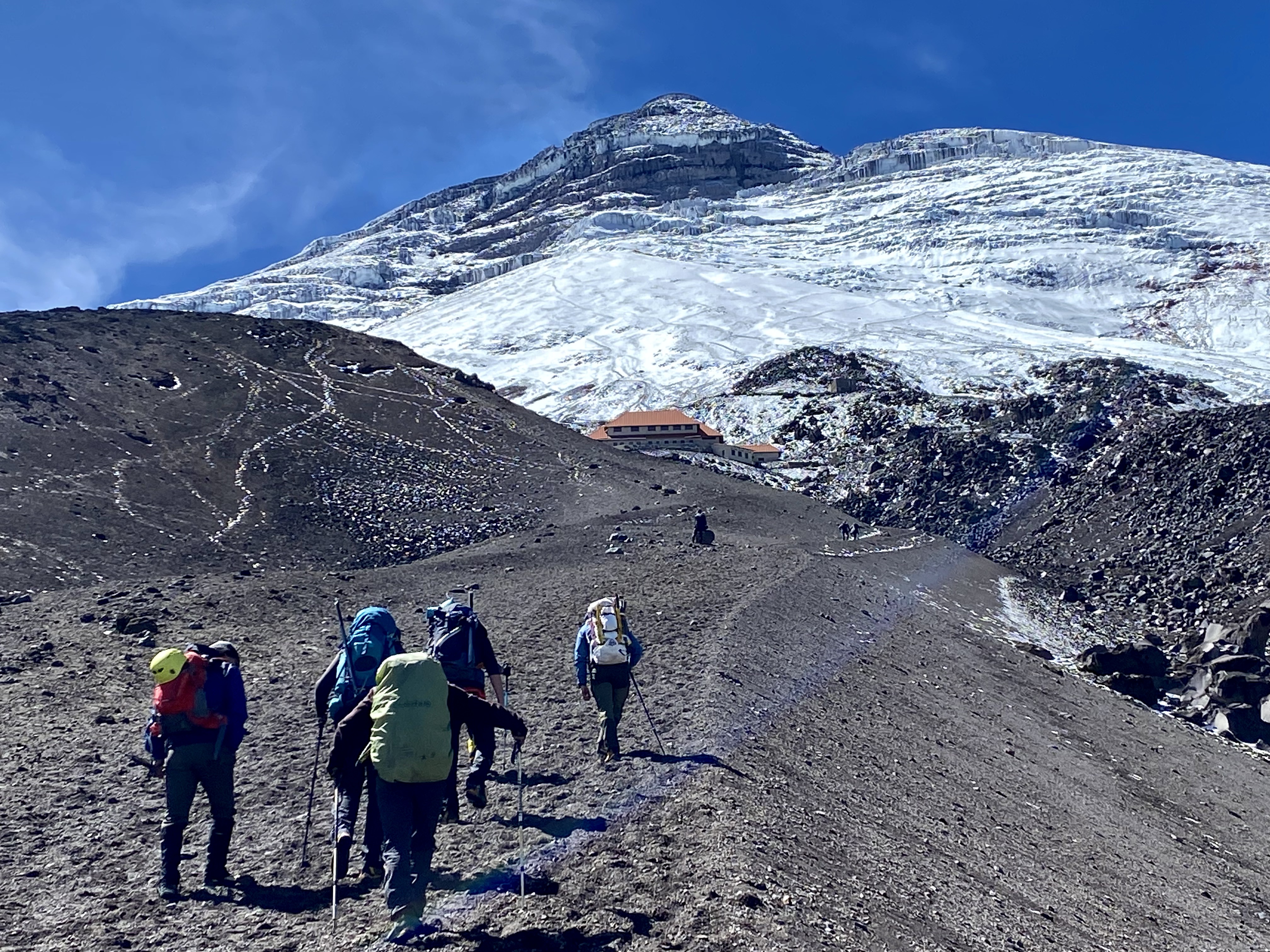
Togehter with their certified guides, climbers usually reach the refuge in the afternoon by vehicle from the Cotopaxi National Park entrance.
From the parking lot 15,900 feet (4,600 meters), there’s a short 45-60 minute hike up to the refuge.
Here you rest, eat, and prepare your gear for the summit push.
2. Summit Push: Midnight Departure
The climb starts around midnight or 1:00 a.m. as to reach the summit by sunrise.
This timing helps avoid soft snow and unstable weather conditions later in the day.
3. Route Details
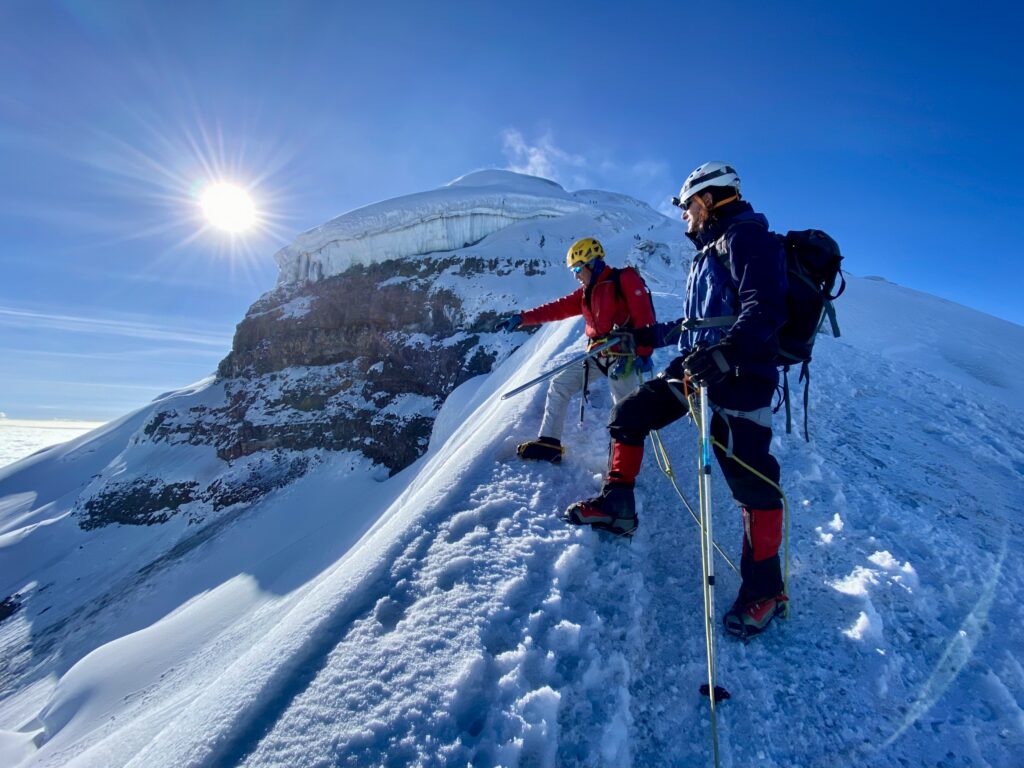
From the refuge, you hike a short distance to the glacier’s edge, where you put on crampons and rope up with your guide.
The glacier route follows a steady incline with sections of hard snow and ice.
There are no technical rock climbs on the normal route, but it requires good acclimatization, proper equipment, and glacier travel skills.
The main challenges are altitude, cold, and sometimes wind.
Total ascent: approx. 3,600 feet (1,100 meters) vertical.
4. Summit: 5,897 m / 19,347 ft
If conditions are good, climbers reach the summit between 6:00 and 8:00 a.m.
The view into the active crater is spectacular and often includes other Andean peaks like Chimborazo and Cayambe.
5. Descent
The descent follows the same route down the glacier.
Total climbing time (round trip) is usually 7–10 hours, depending on pace and conditions.
Once back at the refuge, climbers rest briefly, enjoy a nice breakfast and then descend to the parking area and return to Quito or a nearby lodge.